

MR. JO ECO FLOOR Building Durable Industrial Floors: Why Every Layer Matters
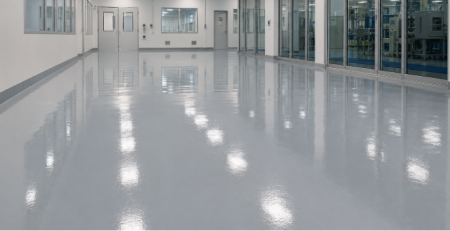
When people think about industrial flooring, they usually picture the finished surface—the smooth, glossy floor they see every day.
In reality, that visible surface is only one part of a complete flooring system.
Just as a building relies on a strong foundation, a durable epoxy floor depends on the performance of every layer beneath it. Skipping or compromising one layer may affect the appearance, durability and service life of the entire floor.
A well-designed epoxy flooring system is built layer by layer, with each component performing a specific role.
Every Layer Has a Purpose
An industrial flooring system is much more than a decorative coating.
Each layer contributes to the overall performance of the floor:
- The concrete provides structural support.
- The primer creates a strong bond with the substrate.
- The underlay repairs and levels damaged concrete where required.
- The self-leveling floor forms the durable wearing surface.
When these layers work together, the result is a seamless floor capable of handling industrial traffic, daily cleaning and years of continuous service.
Step 1: Start with a Sound Foundation
No flooring system can compensate for weak or damaged concrete.
Before flooring begins, the substrate should be properly inspected and prepared. Oil contamination, laitance, loose concrete and existing damage should be removed to create a clean and mechanically sound surface.
Good preparation is the first step towards a successful flooring installation.
Step 2: Priming the Surface
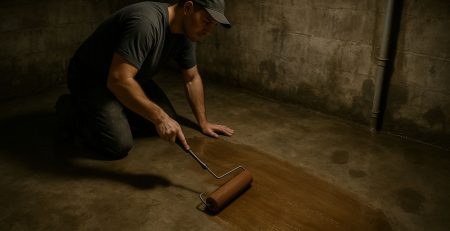
Once the concrete has been prepared, the next step is applying an epoxy primer.
A primer penetrates the concrete surface, binds residual dust and promotes strong adhesion between the concrete and the subsequent flooring layers.
Selecting the right primer depends on factors such as substrate condition, porosity and moisture levels.
Without proper priming, even the best flooring system may not achieve its full performance potential.
Step 3: Repair and Level the Concrete
Industrial floors are rarely perfectly level.
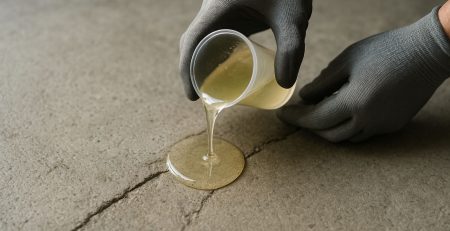
Cracks, potholes, surface undulations and damaged areas should be repaired before applying the final flooring layer.
Where significant levelling is required, an epoxy underlay helps restore the surface while creating a strong foundation for the self-leveling system.
Choosing the appropriate underlay depends on the project requirements. Longer working-time systems are often preferred for larger areas, while faster-curing systems help reduce shutdown time during maintenance projects.
Step 4: The Wearing Surface
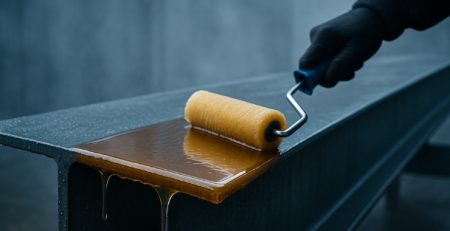
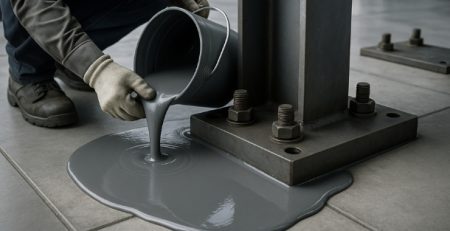
Once the substrate has been properly prepared, the self-leveling epoxy flooring system can be applied.
This final layer provides the properties most people associate with industrial epoxy flooring:
- Seamless finish
- Excellent abrasion resistance
- Easy cleaning
- Dust-free surface
- Attractive appearance
- Long service life
The finished floor protects the concrete beneath while providing a durable working surface for industrial operations.
Introducing the MR. JO Eco Flooring System
The Mr. Jo Eco Flooring System has been developed as a complete industrial flooring solution rather than a collection of individual products.
The system includes:
MR. JO Eco Primer
Provides strong adhesion between concrete and subsequent flooring layers while preparing the substrate for long-term performance.
MR. JO Eco Underlay
Used wherever damaged or uneven concrete requires repair or levelling before the final floor is installed. Different grades allow contractors to choose between extended working time or faster curing depending on project requirements.
MR. JO Eco Floor
A solvent-free self-leveling epoxy flooring system that forms the final wearing surface, delivering durability, easy maintenance and an attractive seamless finish.
Together, these products work as an integrated flooring system designed to simplify installation while delivering dependable long-term performance.
One System, Many Industries
The Eco Flooring System is suitable for a wide range of applications, including:
- Manufacturing plants
- Warehouses
- Pharmaceutical facilities
- Food processing units
- Hospitals
- Laboratories
- Commercial kitchens
- Engineering workshops
- Cleanrooms
- Industrial utility areas
Each project can be customised by selecting the appropriate primer, underlay and flooring thickness to match the service conditions.
Long-Term Performance Begins Below the Surface
Many flooring failures are blamed on the topcoat, when the actual cause lies beneath it.
Poor substrate preparation, inadequate priming or ignoring damaged concrete can shorten the life of even the highest-quality flooring system.
Treating the floor as a complete system rather than individual products helps ensure better adhesion, improved durability and lower maintenance throughout its service life.
Final Thoughts
Industrial flooring should be viewed as an investment in operational reliability rather than simply a finishing activity.
By combining proper surface preparation, effective priming, suitable underlays and a durable self-leveling finish, a complete flooring system provides the strength and protection needed for demanding industrial environments.
Leave a Reply