Tag - hardener

MR. JO JH 1035: Polyetheramine Hardener for Flexible, Clear & High-Performance Epoxy Systems

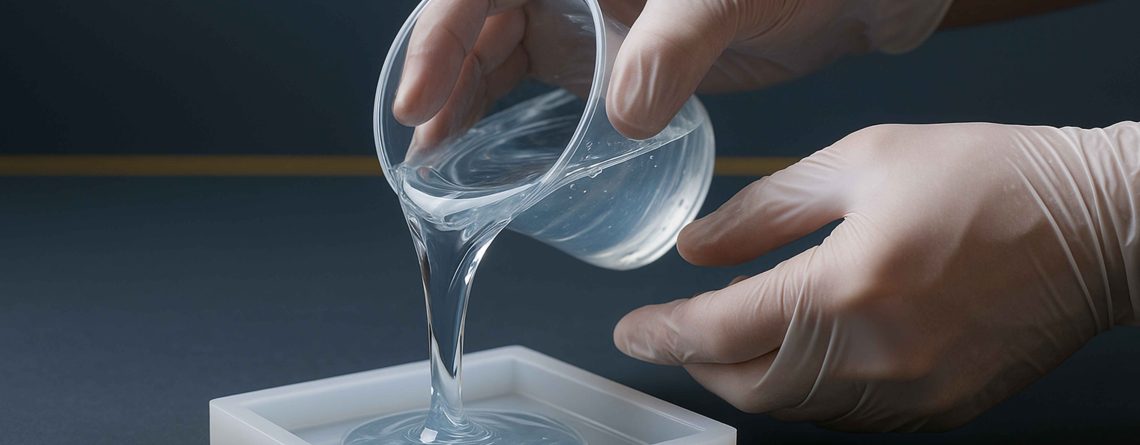
When strength must combine with flexibility, clarity, and toughness, formulators turn to Polyetheramines.  JH 1035 is a polyetheramine (D230 equivalent) that offers outstanding toughness, flexibility, and moisture resistance while retaining compatibility with a wide range of epoxy resins.
Key Technical Data

Chemical Type: Polyetheramine (mono-propylene oxide...

MR. JO JH 1036: The Versatile Triethylenetetramine (TETA) Hardener

When it comes to curing epoxy resins, few hardeners offer the balance of reactivity, economy, and versatility like Triethylenetetramine (TETA). JH 1036 delivers exactly that — a reliable unmodified amine hardener that formulators trust across coatings, flooring, adhesives, and general epoxy systems.

Key Technical Data

Chemical...

JH 1424 vs JH 1425: Choosing the Right Polyamide Hardener for Your Application

If you’ve ever worked with epoxy systems in coatings, adhesives, or marine environments, chances are you’ve encountered the two workhorses: JH 1424 and JH 1425. At first glance, they look like siblings: both are solvent-free polyamide curing agents, both offer excellent adhesion and corrosion resistance, and...

MR. JO JR 3390 – General-Purpose BPF Epoxy Resin with Superior Resistance

Epoxy technology is diverse, but when formulators need a balanced resin offering good chemical resistance, reduced crystallization, and versatile performance across adhesives, laminates, and coatings, a Bisphenol-F (BPF) based epoxy resin becomes the go-to choice. JR 3390 is a general-purpose, unmodified BPF epoxy resin designed to...

MR. JO JR 3005L: Low-Viscosity Modified Epoxy Resin for Flowable Systems

Introduction

When it comes to self-levelling floorings, flowable mortars, and construction adhesives, formulators face the constant challenge of achieving the right balance between workability and performance. Standard bisphenol-A epoxy resins are often too viscous for these applications, requiring external reactive diluents to improve flow. However,...

JR 3000 vs JR 3001 vs JR 3003 vs JR 3125 — which unmodified epoxy resin should you use?

When engineers, formulators and shop managers pick an unmodified epoxy resin they’re solving a set of practical problems: matching viscosity to the process, getting the required optical clarity, tuning cure behavior via an appropriate hardener, and minimizing waste and handling issues on the shop floor....

MR. JO JR-3125 — Very-high-viscosity unmodified epoxy for adhesive formulators (revised)

Technical snapshot Type: unmodified BPA epoxy resin (resin-only) EEW: 200–250 g/eq (reactive backbone for formulators) Viscosity: very high (formulator grade — significantly thicker than JR-3003) Packaging: 10 / 20 / 30 kg packs and barrels; long shelf stability in company packaging

The real problem adhesive makers face

Adhesive manufacturers don’t...

MR. JO JR 3003 — High-Viscosity Unmodified Epoxy for Adhesives & Decoupage Coatings

Technical snapshot Type: Unmodified BPA epoxy resin (resin-only) EEW: 200–230 g/eq Viscosity: 20,000–40,000 mPa·s (high) Packs: 10 / 20 / 30 kg and barrels; long shelf stability

Primary problem addressed

Many adhesive and decorative coating tasks require body — the ability to stay where applied, bridge gaps and avoid sag...