

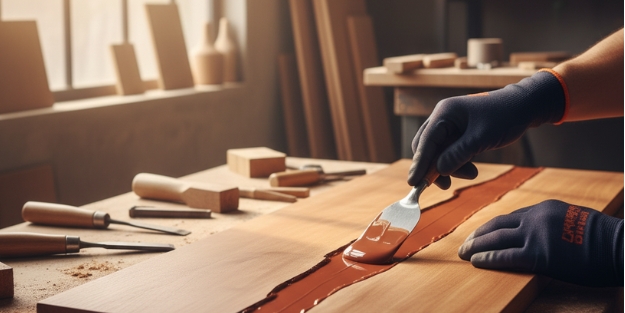
Fix the Flaw, Match the Grain: Wood Repair Made Invisible with MR. JO Tecbond-AWF, WFN & WF
Whether you’re building heirloom furniture or repairing a chipped edge on a door, one thing can ruin your hard work — a visible, mismatched repair.
The Problem:
Wood cracks, dents, nail holes, or chipped corners are inevitable. But most repair pastes and putties solve only half the problem — they fill the gap but stand out awkwardly in color and finish.
You’re left with a furniture piece that’s smooth… but scarred.
The MR. JO Solution:
Three professional-grade epoxy pastes — same strength, different wood tones — designed to disappear into the grain.
🎯 Meet the Trio: Repair Pastes with Built-in Camouflage
| Product | Wood Tone | Best For |
| MR. JO Tecbond – AWF | Beige | Light woods (birch, maple, white pine) |
| MR. JO Tecbond – WFN | Light brown | Medium woods (oak, sheesham, deodar) |
| MR. JO Tecbond – WF | Medium-dark brown | Rich-toned woods (teak, walnut, mahogany) |
Each is a pre-filled, thixotropic epoxy paste — supplied ready-to-use, with:
- Mixing ratio: 100:80 PBW
- Excellent sandability
- No shrinkage
- Strong adhesion to raw or finished wood
- Compatibility with paint, polish, and varnish
💡 Real-World Scenarios
- Scenario 1: Cracks in premium teak wood panels
A furniture manufacturer uses WF to fill minor corner splits in custom-crafted teak doors — no color mismatch after finishing. - Scenario 2: Dowel joints in modular pine furniture
A carpenter uses WFN to smoothen joints before polish. The paste blends so well that no joint lines are visible after the coat. - Scenario 3: Restoring antique frames with carvings
An artisan uses AWF to repair broken edge designs on pale birchwood frames. Once polished, the work looks seamless.

🧰 How to Use: 3-Step Application Guide
- Surface Prep
- Clean the area thoroughly. Remove dust, oil, or loose debris.
- Ensure wood is dry and not coated with polish.
- Mix & Apply
- Mix Base and Hardener at 100:80 PBW.
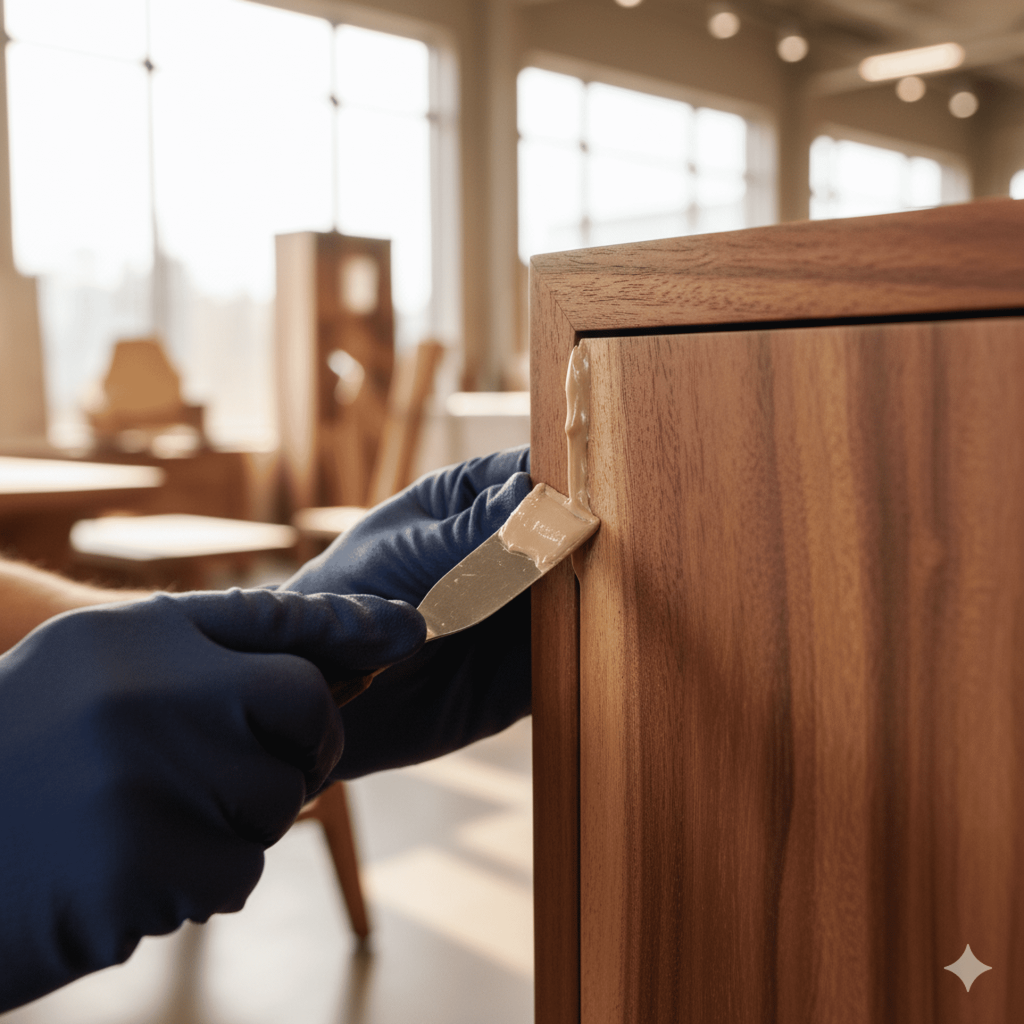
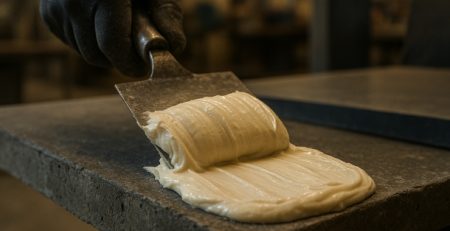
- Apply using a spatula or finger. For best results, use wet fingers to smooth the surface and shape edges.
- Slightly overfill the gap to allow sanding after cure.
- Finish & Blend
- Allow to cure (can be accelerated with mild heat).
- Sand flush with the surface.
- Apply matching polish, stain, or varnish — the repair vanishes into the wood.
🛠️ Why Epoxy is Superior to Regular Wood Fillers
| Regular Putty | MR. JO Epoxy Pastes |
| Shrinks over time | Stays stable, no shrinkage |
| Weak bonding | High adhesion to wood |
| Brittle on sanding | Smooth, sandable finish |
| Poor polishability | Takes polish and stain like natural wood |
✨ Built for Woodworkers, by Epoxy Experts
At Mr. JO, we’ve worked with artisans and engineers alike to develop wood repair systems that don’t just fill the crack — they respect the craftsmanship behind it.
Whether you’re restoring, customizing, or hiding installation flaws, AWF, WFN, and WF help make your repair work invisible, reliable, and beautiful.
✅ Choose Your Match:
- Light tone? Go AWF
- Medium tone? Pick WFN
- Dark tone? Use WF
- Bring back the grain. Hide the flaw. Make it last — with MR. JO Tecbond wood repair pastes.

Leave a Reply