

Floor Underlays & Screeds
Not every millimetre in a flooring system performs the same job.
Two flooring quotations may both describe a “3 mm epoxy floor”, yet the flooring systems beneath that final surface can be very different. One may consist almost entirely of an expensive self-levelling epoxy, while another may use an engineered underlay beneath it to build thickness more economically without compromising performance.
An underlay is rarely the most visible part of a flooring system, but it is often the layer that determines how well the finished floor performs years after installation. Understanding what an underlay does—and how it interacts with the primer below and the flooring above—helps you evaluate a flooring system rather than simply compare a price per square foot.
Let’s understand what’s beneath the finished floor.
When does a flooring system use an underlay?
“Why can’t the contractor simply apply a thicker topcoat?”
Every layer in a flooring system has a purpose. Primers prepare the substrate for bonding. Underlays build thickness, improve level and create a uniform foundation. Topcoats provide the final appearance and performance.
Using a topcoat to achieve the thickness that should have been built by an underlay is often neither economical nor technically desirable. Likewise, an underlay should not be expected to perform the role of the final wearing surface.
Mr. Jo’s Insight
Every layer should do the job it was designed to do.
When additional thickness or levelling is required, Mr. Jo Underlay systems provide engineered solutions before the finished flooring layer is applied.
Continue Exploring
Related: Flooring Primers • Topcoats
Flowable or Tampable?
“They both contain epoxy. So what’s the difference?”
The choice isn’t simply about the resin—it’s about how the flooring system is expected to perform.
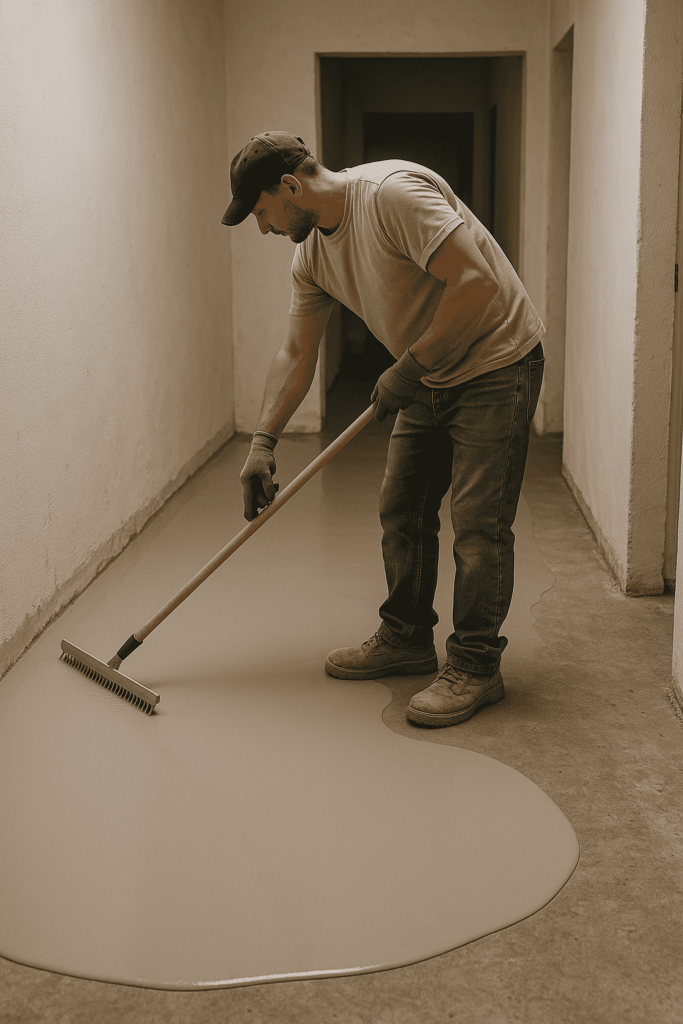
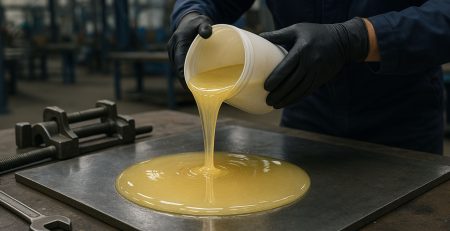
Flowable underlays are designed for thinner build-ups, typically up to about 3 mm. They spread easily, self-level and produce a smooth surface that is often ready for the next flooring layer after normal preparation.
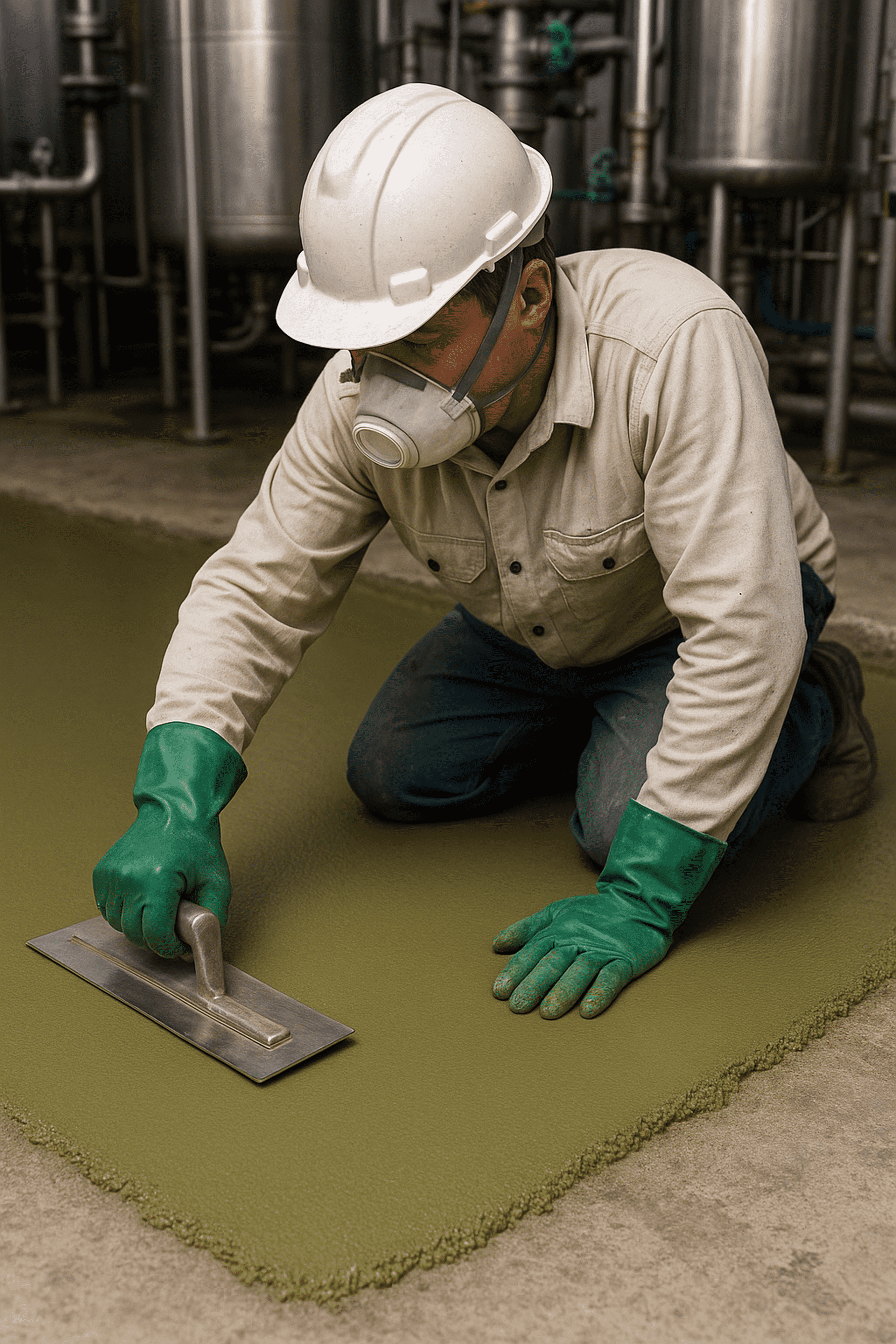
Tampable underlays are intended where greater thickness is required, typically 5-10 mm per layer. Their higher aggregate loading makes them economical for thicker construction while producing excellent compressive performance when properly compacted.
Mr. Jo’s Insight
Flowable underlays make levelling easier.
Tampable underlays make building thickness more economical.
For thinner applications, Mr. Jo Underlay FLO provides an excellent resin-rich flowable system. Where thicker construction and longer working time are required, Mr. Jo Underlay TMP provides a dependable tampable solution. When rapid turnaround is important, Mr. Jo Eco Underlay offers a faster-curing alternative.
Continue Exploring
Related: Compaction & Levelling
How does the primer influence the underlay?
“Should the screed be laid over a wet, tacky or dry primer?”
The answer depends on the type of underlay being installed.
Flowable systems contain sufficient resin to bond well with a properly cured primer.
Tampable underlays contain significantly more aggregate, leaving less free resin available to wet the substrate. In these situations, a fresh wet or tacky primer often provides a stronger bond.
Highly absorbent concrete introduces another consideration. If the first primer coat is largely absorbed into the concrete, it may no longer be available to bond with the underlay. Allowing the first coat to seal the substrate before applying a second wet or tacky coat often produces a more reliable flooring system.
Mr. Jo’s Insight
Sometimes the first primer prepares the concrete.
The second primer prepares it for the underlay.
The appropriate Mr. Jo Primer should always be viewed as part of the underlay system—not as an independent layer.
Continue Exploring
• Product FAQ
Related: Flooring Primers
□ Why do workmanship and compaction matter?
“The screed looks level. Isn’t that enough?”
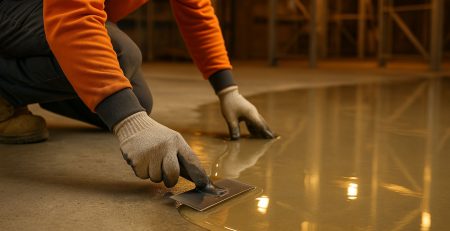
A screed can appear perfectly acceptable while still containing entrapped air, poor density or uneven finishing.
Proper compaction improves density, compressive strength and long-term performance. Poor workmanship may not become obvious immediately, but often reveals itself later through excessive sealer consumption, uneven topcoat absorption or premature flooring problems.
Flowable underlays achieve their finish naturally. Tampable systems depend far more on the quality of compaction and levelling carried out during installation.
Mr. Jo’s Insight
A trowel creates the surface.
Compaction creates the foundation.
Where tampable construction is required, Mr. Jo Underlay TMP and Eco Underlay are designed to perform when installed using good flooring practice.
Continue Exploring
• Product Page
• Product FAQ
• Technical Data Sheet
Related: Topcoats
Does every underlay need sealing?
“Can the next flooring layer be applied directly?”
That depends on the underlay.
Flowable systems are generally resin-rich and often provide a relatively closed surface.
Tampable systems contain substantially higher aggregate loading and commonly benefit from a sealer coat before receiving the next flooring layer. The sealer helps control absorption, improves bonding and creates a more uniform foundation for coatings or self-levelling epoxy.
Mr. Jo’s Insight
A sealer doesn’t improve the underlay.
It prepares the underlay for everything above it.
Where sealing is recommended, Mr. Jo Eco Primer P50i provides an excellent sealer coat before the finished flooring layer is installed.
Continue Exploring
Related: Flooring Primers • Topcoats
□ Can I modify the filler or use local aggregates?
“The contractor says he’ll use local fillers to reduce cost.”
The performance of an underlay depends not only on the resin and hardener but also on the aggregate itself.
Particle grading, cleanliness, moisture content and the quantity of filler all influence workability, strength, porosity and long-term performance.
Increasing filler loading beyond the engineered design reduces the amount of resin available to bind every aggregate particle. While this may appear economical, it can increase porosity, reduce strength and affect the performance of every layer above it.
Mr. Jo’s Insight
Changing the filler changes the engineering.
Mr. Jo Underlay systems are designed around complete formulations—not individual components.
Continue Exploring
Related: Repair Mortars • Topcoats
Can an underlay replace a repair mortar?
“Can I simply fill damaged areas while laying the screed?”
Small depressions and local imperfections can often be addressed during underlay installation, provided the substrate has been properly prepared and primed.
Where damage is extensive or structural repairs are required, a dedicated repair mortar provides a more dependable solution before the flooring system is built.
Mr. Jo’s Insight
Repair mortars restore the concrete.
Underlays build the floor above it.
For dedicated repair applications, Mr. Jo CRP Repair Mortar should be considered before proceeding with the underlay.
Continue Exploring
Related: Concrete Repairs
My project is different
No two flooring projects are identical.
If your project involves unusual service conditions, greater thickness, chemical exposure or specialised flooring requirements, Ask Mr. Jo.
We’ll help you evaluate the complete flooring build-up—not just one layer—and recommend the most appropriate underlay system for your project.

Leave a Reply