

Industrial Epoxy Flooring Solutions
Choosing the Right Epoxy Flooring System for Your Factory
Selecting an epoxy flooring system is rarely about choosing between a floor coating, a 2 mm floor or a 3 mm multilayer system.
More often, it is about comparing different recommendations.
One contractor may recommend an epoxy floor coating.
Another may recommend a 2 mm epoxy flooring system.
Someone else may propose a multilayer flooring system.
For specialised applications, recommendations may include heavy-duty flooring, chemical-resistant flooring or antistatic flooring.
In many cases, every recommendation may be technically correct.
The difference usually lies in the condition of the concrete, the work the floor is expected to perform, the operating environment and the way the flooring system is constructed.
Comparing flooring systems only by thickness or price rarely tells the complete story.
Understanding how different flooring systems are built, where they perform best and why they have been recommended makes it much easier to compare quotations and select the flooring system best suited to your project.
This guide explains the most commonly specified industrial epoxy flooring systems, where each performs best and how different systems can be combined across a factory to optimise performance, maintenance and project cost.
Every Epoxy Floor Is Built Layer by Layer
An epoxy floor is much more than the finished surface you see.
Long-term performance depends on every layer beneath it.
A successful flooring system is built from the concrete upwards, with each layer performing a different responsibility.
Depending upon the condition of the floor and the performance expected, a flooring system may include four stages.
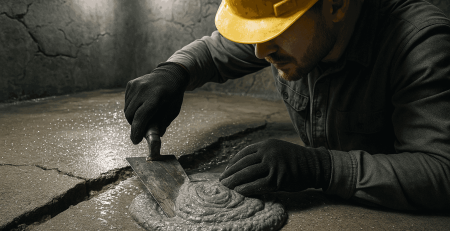
Floor Repairs
Repairing cracks, potholes, damaged edges, porous concrete and other surface defects before flooring begins.
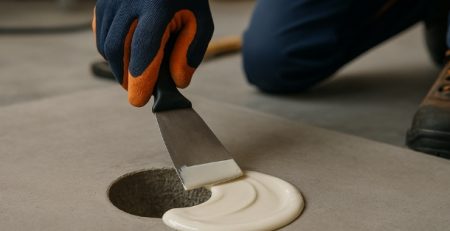
Flooring Primers
Creating a strong bond between the concrete and the flooring system while preparing the surface for subsequent layers.
Underlays & Screeds
Correcting levels, rebuilding damaged areas and creating additional floor build where required.
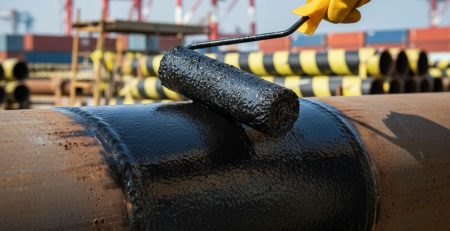
Epoxy Floor Topcoats
Providing the seamless working surface expected to deliver appearance, abrasion resistance, hygiene and long-term durability.
Understanding these layers helps explain why two flooring quotations of apparently similar thickness may be constructed differently while both remain technically correct.
Continue Exploring
- Floor Repairs
- Flooring Primers
- Underlays & Screeds
- Epoxy Floor Topcoats
Before Comparing Flooring Systems
Before selecting a flooring system, it helps to understand the project rather than the products.
A few practical considerations often influence the final flooring specification.
- Is the floor newly constructed or already in service?
- Does the concrete require repairs before flooring begins?
- Will different work areas operate under different conditions?
- Is the existing floor already level or will rebuilding be required?
- Will forklifts, pallet trucks or heavy machinery operate on the floor?
- Are chemicals handled only in selected locations?
- Is easy future maintenance and recoating important?
- How much shutdown time is available for installation?
These questions do not necessarily point towards one flooring system.
They simply help determine which flooring system makes the most engineering and commercial sense for each work area.
Factors That Often Influence Flooring Selection
Flooring thickness is only one part of the decision.
Many successful flooring projects are influenced just as much by practical considerations such as:
- Existing floor condition.
- Concrete repairs required before flooring.
- Traffic intensity.
- Future maintenance philosophy.
- Available shutdown time.
- Equipment installation schedules.
- Door clearances and floor levels.
- Budget allocation across different work areas.
- Future expansion plans.
- Hygiene requirements.
- Chemical exposure.
Considering these factors at the beginning of a project often results in a flooring system that performs better throughout its service life.
Standard Industrial Epoxy Flooring
Most industrial facilities do not require specialised flooring systems.
Engineering workshops, production areas, warehouses, assembly lines and packaging units generally require a durable, seamless floor that protects the concrete, improves housekeeping and remains easy to maintain throughout its service life.
Several flooring systems can successfully achieve these objectives.
The right choice depends upon the condition of the concrete, the working environment and the performance expected over the years.
MR. JO Floorkot HB Epoxy Floor Coating
Typical Flooring System
- Repair the concrete where required.
- Apply MR. JO Eco Primer P50i.
- Apply two coats of MR. JO Floorkot HB.
Where longer maintenance intervals or heavier traffic are expected, an additional coat of MR. JO Floorkot HB may be incorporated into the original specification to increase the overall film build and extend the service life of the flooring.
Where This Flooring System Performs Best
An epoxy floor coating is often the preferred solution when the existing concrete is already in good condition and additional floor thickness offers little practical advantage.
It creates a seamless coloured work surface that improves housekeeping, reduces dusting and simplifies routine cleaning.
Because the flooring follows the existing concrete profile, careful surface preparation becomes an important part of achieving an attractive finish.
The system is also easy to maintain throughout its life.
As the floor gradually wears over the years, additional coats of MR. JO Floorkot HB can restore appearance and extend service life without rebuilding the complete flooring system.
Typical Work Areas
- Engineering Workshops
- Assembly Lines
- Packaging Areas
- Warehouses
- Utility Areas
- Maintenance Workshops
- Machine Shops
- Stores
- Service Corridors
- Inspection Areas
Your Other Options For Similar Work Areas
Depending upon the operating conditions, the same work areas may also successfully use:
- MR. JO Eco Floor where a smoother and thicker flooring system is preferred.
- MR. JO Eco Underlay iFLO with MR. JO Eco Floor where additional floor build, improved impact resistance or floor correction is required.
- MR. JO Chemical Resistant Flooring Systems where aggressive chemicals become part of the manufacturing process.
- MR. JO Antistatic Flooring Systems where electrostatic control is required.
MR. JO Insight
A floor coating is not a smaller version of an epoxy floor.
It is a complete flooring system in its own right.
When the concrete is already in good condition, additional thickness does not automatically create a better floor.
2 mm Industrial Epoxy Flooring
Typical Flooring System
- Repair the concrete where required.
- Apply MR. JO Eco Primer P50i.
- Apply 2 mm MR. JO Eco Floor.
Where This Flooring System Performs Best
A 2 mm epoxy flooring system has become one of the most widely specified industrial flooring systems because it provides an excellent balance between finish quality, durability and long-term performance.
The additional flooring thickness helps produce a smoother working surface while improving resistance to everyday industrial traffic.
Where the concrete has been properly prepared and levelled, a 2 mm flooring system delivers excellent long-term performance across a wide range of manufacturing environments.
For many new industrial projects, this has become the benchmark flooring specification against which other systems are compared.
Typical Work Areas
- Food Processing
- Pharmaceutical Manufacturing
- Engineering Industries
- Automotive Components
- Warehouses
- Logistics Centres
- Textile Manufacturing
- General Manufacturing
- Clean Production Areas
Your Other Options For Similar Work Areas
Depending upon the operating conditions, these areas may also successfully use:
- MR. JO Floorkot HB where the concrete is already smooth and additional flooring thickness offers little practical benefit.
- 3 mm Multilayer Flooring where rebuilding the floor or improving impact resistance becomes part of the project.
- MR. JO Chemical Resistant Flooring Systems where chemical exposure influences flooring selection.
- MR. JO Antistatic Flooring Systems where static control is required.
MR. JO Insight
Additional flooring thickness should be selected because the floor needs it—not because the specification expects it.
Good concrete preparation often contributes more to long-term flooring performance than simply increasing flooring thickness.
3 mm Multilayer Industrial Epoxy Flooring
Typical Flooring System
- Repair the concrete where required.
- Apply MR. JO Eco Primer P50i.
- Apply 2 mm MR. JO Eco Underlay iFLO.
- Apply 1 mm MR. JO Eco Floor.
Where This Flooring System Performs Best
Instead of building the complete flooring thickness using self-level epoxy flooring, this system first builds the floor using MR. JO Eco Underlay iFLO before applying the finished flooring layer.
This approach offers several practical advantages.
The underlay allows local floor irregularities to be corrected before the final flooring layer is installed.
The applicator can inspect the underlay, correct minor imperfections and deliver a smoother finished floor.
Building thickness using an underlay also provides a practical balance between engineering performance and project economics.
Many experienced flooring contractors prefer this construction because the final flooring layer is applied over an already prepared working surface rather than directly over repaired concrete.
Typical Work Areas
- Forklift Routes
- Production Areas
- Heavy Warehouses
- Engineering Industries
- Manufacturing Plants
- Machine Areas
- Distribution Centres
- Material Handling Areas
Your Other Options For Similar Work Areas
These work areas may also successfully use:
- MR. JO Eco Floor where rebuilding is unnecessary and the existing concrete is already suitable for flooring.
- Heavy Duty Industrial Epoxy Flooring where substantially greater loading or impact resistance is expected.
- MR. JO Chemical Resistant Flooring Systems where the process environment influences flooring selection.
MR. JO Insight
Customers usually see the finished floor.
Experienced flooring contractors know that much of the engineering is completed before the final flooring layer is ever installed.
Heavy Duty Industrial Epoxy Flooring
Some industrial floors are expected to withstand far greater demands than normal production areas.
Continuous forklift traffic.
Heavy pallet movement.
Machine loading.
Steel wheel trolleys.
Repeated impact.
In these situations, the flooring system is designed to distribute loads more effectively and provide greater resistance to wear and impact over its service life.
Rather than simply increasing the thickness of the finished flooring layer, heavy-duty flooring systems build strength into the complete flooring structure.
Typical Flooring Systems
3 mm Heavy Duty Industrial Flooring
- Repair the concrete where required.
- Apply MR. JO Eco Primer P50i.
- Apply 2 mm MR. JO Eco Underlay iFLO.
- Apply 1 mm MR. JO Eco Floor.
This system is commonly selected where regular forklift movement, pallet trucks and heavier industrial traffic are expected while maintaining a smooth and seamless finished floor.
5 mm Heavy Duty Industrial Flooring
- Repair the concrete where required.
- Apply MR. JO Eco Primer P50i.
- Apply 4 mm MR. JO Eco Underlay iFLO.
- Apply 1 mm MR. JO Eco Floor.
Where loading conditions become more demanding, increasing the thickness of the structural underlay often provides a better engineering solution than simply increasing the thickness of the finished flooring layer.
The final flooring specification should always reflect the expected operating conditions rather than a target thickness.
Typical Work Areas
- Forklift Aisles
- Loading Bays
- Heavy Engineering Workshops
- CNC Machine Shops
- Steel Fabrication Plants
- Manufacturing Facilities
- Heavy Storage Areas
- Dispatch & Logistics Areas
Your Other Options For Similar Work Areas
Where loading conditions are less demanding, these areas may also successfully use:
- MR. JO Floorkot HB where the concrete is already in good condition and traffic is moderate.
- MR. JO Eco Floor where a smooth industrial flooring system is preferred without requiring additional structural build.
MR. JO Insight
Heavy-duty flooring is not created by adding more epoxy.
It is created by building strength where the floor actually needs it.
Chemical Resistant Epoxy Flooring
Some manufacturing processes expose floors to acids, alkalis, solvents, oils or aggressive cleaning chemicals.
In these environments, chemical resistance becomes a more important design consideration than flooring thickness.
The flooring system should always be selected according to the chemicals handled, their concentration, operating temperature, frequency of exposure and the duration of contact.
Different chemicals affect epoxy systems differently.
For this reason, chemical-resistant flooring deserves a dedicated engineering approach rather than simply specifying a thicker industrial floor.
Typical MR. JO Chemical Resistant Flooring Systems
Depending upon the application, chemical resistant flooring systems may include:
- MR. JO CRSL
- MR. JO Protectokot CR
- MR. JO Protectokot CRH
- MR. JO Protectokot CSA
- Chemical Resistant Underlays
- Specialised Primer Systems
Different combinations are selected depending upon the chemical environment and operating conditions.
Typical Work Areas
- Chemical Processing Plants
- Effluent Treatment Plants
- Acid Storage Areas
- Alkali Handling Areas
- Battery Charging Rooms
- Process Equipment Foundations
- Chemical Dosing Areas
- Industrial Laboratories
MR. JO Insight
Chemical resistance is determined by the process—not by the thickness of the flooring.
Understanding the chemicals is always the first step towards selecting the right flooring system.
Continue Exploring → Chemical Resistant Epoxy Flooring
Antistatic Epoxy Flooring
Certain industries require flooring systems capable of safely dissipating electrostatic charges.
These flooring systems are commonly used where static electricity may interfere with electronic components, attract dust or create a safety concern.
Selecting an antistatic flooring system involves understanding the required electrical resistance, grounding requirements and operating environment.
Because these requirements vary considerably between industries, antistatic flooring is best considered as a specialised flooring system.
Typical Applications
- Electronics Manufacturing
- Semiconductor Facilities
- Pharmaceutical Production
- Cleanrooms
- Explosive Manufacturing Areas
- Control Rooms
- Data Centres
- Sensitive Assembly Areas
MR. JO Insight
Antistatic flooring is not selected because it looks different.
It is selected because the manufacturing process requires electrical performance in addition to mechanical performance.
Continue Exploring → Antistatic Epoxy Flooring
One Factory. Different Work Areas. Different Flooring Systems.
Very few factories operate under identical conditions throughout the plant.
A warehouse carrying forklifts throughout the day has different flooring requirements from an assembly area.
A packaging section may require only a durable epoxy coating while heavy machine areas benefit from a multilayer flooring system.
Chemical process areas may require specialised chemical-resistant flooring.
Electronics manufacturing may require antistatic flooring.
Instead of selecting one flooring specification for an entire factory, many successful projects combine different flooring systems according to the work each area is expected to perform.
This approach often improves performance, simplifies maintenance and optimises the overall project cost.
Typical Factory Flooring Plan
| Factory Work Area | Typical MR. JO Flooring System |
| Engineering Workshops | MR. JO Floorkot HB |
| Assembly Lines | MR. JO Floorkot HB or MR. JO Eco Floor |
| Packaging Areas | MR. JO Floorkot HB |
| Production Areas | MR. JO Eco Floor |
| Food Processing | MR. JO Eco Floor |
| Pharmaceutical Manufacturing | MR. JO Eco Floor |
| Warehouses | MR. JO Eco Floor |
| Forklift Aisles | 3 mm Multilayer Flooring |
| Heavy Manufacturing | Heavy Duty Flooring |
| Machine Foundations | Heavy Duty Flooring |
| Loading Bays | Heavy Duty Flooring |
| Chemical Process Areas | Chemical Resistant Flooring |
| Battery Charging Rooms | Chemical Resistant Flooring |
| Electronics Manufacturing | Antistatic Flooring |
| Cleanrooms | Antistatic Flooring |
| Walls & Coving | MR. JO Wallkot HB |
MR. JO Insight
The best flooring specification isn’t always one flooring system.
It is often the right combination of flooring systems across different work areas.
Design the flooring around the way the factory operates—not around a single specification.
Continue Exploring Industrial Flooring
Every industrial epoxy flooring system is built using individual layers working together.
Understanding each layer makes it easier to compare quotations, estimate materials and specify flooring systems with confidence.
Floor Repairs
Repairing cracks, potholes, damaged edges, porous concrete and contaminated surfaces before flooring begins.
Flooring Primers
Understanding when to use MR. JO Eco Primer P50i, MR. JO Bondkot LVC, MR. JO Bondkot UPS and other primer systems.
Underlays & Screeds
Learn when to use MR. JO Eco Underlay iFLO and MR. JO Eco Underlay iTMP for rebuilding floors, correcting levels and constructing multilayer flooring systems.
Epoxy Floor Topcoats
Compare MR. JO Floorkot HB, MR. JO Eco Floor, MR. JO CRSL and other specialised flooring systems.
Floor Repairs Before Epoxy Flooring
Understand how cracks, potholes, damaged edges, porous concrete, contamination and floor level differences should be repaired before epoxy flooring begins.
Flooring Tools & Resources
This knowledge centre will continue to expand with practical tools to simplify project planning and specification.
Planned resources include:
- Flooring Quantity Calculators
- Material Consumption Calculators
- Project Budget Estimators
- Standard BOQs
- Consultant Specifications
- Industry-wise Flooring Recommendations
- Work Area Selection Guides
- Interactive Flooring System Selector
These resources are intended to help contractors, consultants, maintenance engineers and factory owners compare flooring systems, estimate materials and prepare project specifications with greater confidence.
Closing Thoughts
Every industrial flooring project is different.
The condition of the concrete, the operating environment, expected traffic, maintenance philosophy and future plans all influence the final flooring system.
There is rarely one “correct” flooring specification.
Different flooring systems solve different engineering requirements.
Understanding how those systems are built, where they perform best and how they can be combined across different work areas makes it easier to compare proposals and select the most appropriate flooring solution.
Whether the project requires a simple epoxy floor coating, a standard industrial flooring system, a heavy-duty installation or a specialised flooring solution, the engineering approach remains the same.
The best flooring system isn’t the one with the greatest thickness.
It’s the one that’s designed for the work your floor is expected to perform.



Leave a Reply