

MR. JO CHEMICAL RESISTANT COATINGS
A Practical Guide to Selecting the Right Chemical Resistant Epoxy System
Chemical-resistant flooring and protective coatings are not selected simply by choosing the strongest product. The right system depends on what the coating will be exposed to, how severe the exposure is, whether the surface is horizontal or vertical, and whether the application involves immersion, splash or intermittent contact.
The MR. JO Protectokot range has been developed around different chemical-resistant technologies for environments ranging from general chemical exposure and solvent handling to aggressive process chemicals, seawater, wastewater and immersion applications.
Choosing the Right Protectokot System
MR. JO Protectokot HB
Standard high-build chemical-resistant coating for most industrial floor, wall, steel and concrete applications where protection, appearance and ease of application are important.
MR. JO Protectokot vHB
Non-sag high-build coating developed specifically for vertical and overhead applications.
MR. JO Protectokot CR
General industrial chemical-resistant coating for broad chemical exposure, including organic acids and petroleum products.
MR. JO Protectokot CSA
Fast-curing chemical-resistant coating suited where rapid return to service and excellent solvent resistance are required.
MR. JO Protectokot CRH
Novolac chemical-resistant coating for aggressive industrial chemical environments.
MR. JO Protectokot BLK
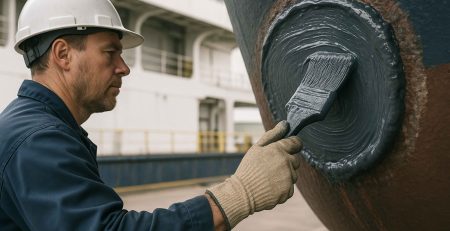
Coal tar epoxy system for immersion, seawater, wastewater and aggressive waterproofing applications where a black finish is acceptable.
Chemical Family Guide
| Chemical Family | HB | vHB | CR | CSA | CRH | BLK | Engineering Note |
| General industrial chemicals | R | R | R | R | R | S | Select based on application and exposure |
| Organic acids | S | S | R | S | S | C | CR generally preferred |
| Mineral / inorganic acids | S | S | S | R | R | C | CSA and CRH generally preferred |
| Strong alkalis | S | S | S | S | R | C | Novolac generally preferred for severe service |
| Alcohols | S | S | C | R | R | C | CSA and CRH generally preferred |
| Aromatic solvents | S | S | S | R | R | C | CSA particularly suitable |
| Chlorinated hydrocarbons | C | C | C | S | R | C | CRH generally preferred |
| Petroleum products | R | R | R | R | R | S | All generally suitable |
| Sea water | S | S | S | S | S | R | BLK preferred for immersion |
| Wastewater | S | S | S | S | S | R | BLK preferred |
| Aggressive waterproofing | C | C | C | C | S | R | BLK preferred where black finish is acceptable |
Legend: R – Recommended | S – Suitable | C – Conditional (review concentration, temperature and exposure) | NR – Not Recommended | NA – Data Not Available
Exposure-Based Product Selection
| Service Condition | Preferred Starting Point |
| Decorative chemical-resistant coating | HB |
| Vertical chemical-resistant coating | vHB |
| General industrial chemical exposure | CR |
| Solvent-rich environments | CSA |
| Aggressive process chemicals | CRH |
| Continuous immersion | BLK / CRH |
| Marine structures | BLK |
| Sea water immersion | BLK |
| Underground structures | BLK |
| Aggressive waterproofing | BLK |
Typical Applications
| Application | Recommended Product |
| Industrial Floors | HB |
| Chemical Resistant Walls | vHB |
| Bund Walls | vHB |
| Battery Rooms | HB / CRH |
| Chemical Storage | HB / CRH |
| Solvent Handling | CSA |
| Food Processing | CR / HB |
| Pharmaceutical Process Areas | HB / CRH |
| Chemical Manufacturing | CRH |
| Tank Exterior | vHB |
| Tank Interior | CR / CSA / CRH (application dependent) |
| Marine Structures | BLK |
| Jetties | BLK |
| ETP / STP | BLK |
| Underground Concrete | BLK |
| Buried Pipelines | BLK |
| Sea Water Intake Structures | BLK |
Building a Complete Chemical Resistant Flooring System
A chemical-resistant coating should always be considered as a complete protection system, not simply as a topcoat.
Typical construction: Surface Preparation → Repairs → Primer → Chemical-Resistant Underlay/Screed (where required) → Two to Three Coats of the Selected Protectokot System.
Primer: New concrete – primer as specified. Existing, difficult or moisture-affected concrete – MR. JO Bondkot UPS is generally the preferred recommendation.
Underlay: Standard recommendation: MR. JO Underlay CMR. Where greater chemical resistance is required throughout the system, screeds may be prepared using selected Protectokot systems with graded silica aggregates. Silica grading and loading should be selected according to the application.
Important Engineering Considerations
• Product selection should be based on the actual service environment rather than ranking one chemistry as universally better than another.
• The Protectokot range uses different chemical-resistant technologies while maintaining excellent industrial mechanical performance.
• Pigmented coatings improve appearance and simplify inspection. Certain chemicals may alter coating colour without indicating coating failure.
• Epoxy systems provide excellent chemical protection but should not be selected where long-term UV colour retention is the primary requirement.
• Surface preparation, repairs, primer, underlay/screed and final coating application are all important to complete system performance.
Ask MR. JO
Every chemical-resistant flooring or coating project has different requirements. Consider the chemical, concentration, temperature, exposure frequency, surface orientation, immersion conditions, required thickness and UV exposure before selecting a system.
If you are unsure which Protectokot system is appropriate, Ask MR. JO. Our technical team can help evaluate the service environment and develop a complete chemical-resistant protection system rather than selecting a product based on chemical name alone.

Leave a Reply